Jan 21, 2026
By Rick McNary
Shelby Beyer of Cheney was burnt out, exhausted and struggling with health issues. As a nurse, she saw the impacts of unhealthy food choices on her patients and wondered if altering her diet to less heavily processed foods would help her feel better.
After 20 years of working in health care, she hung up her stethoscope, purchased 20 acres, and began growing her own food not only for her family, but as a business. She worked at JAKO Farm and MG Honor Farm for a while and learned the various aspects of the business before going full time and starting Anchor Farm.
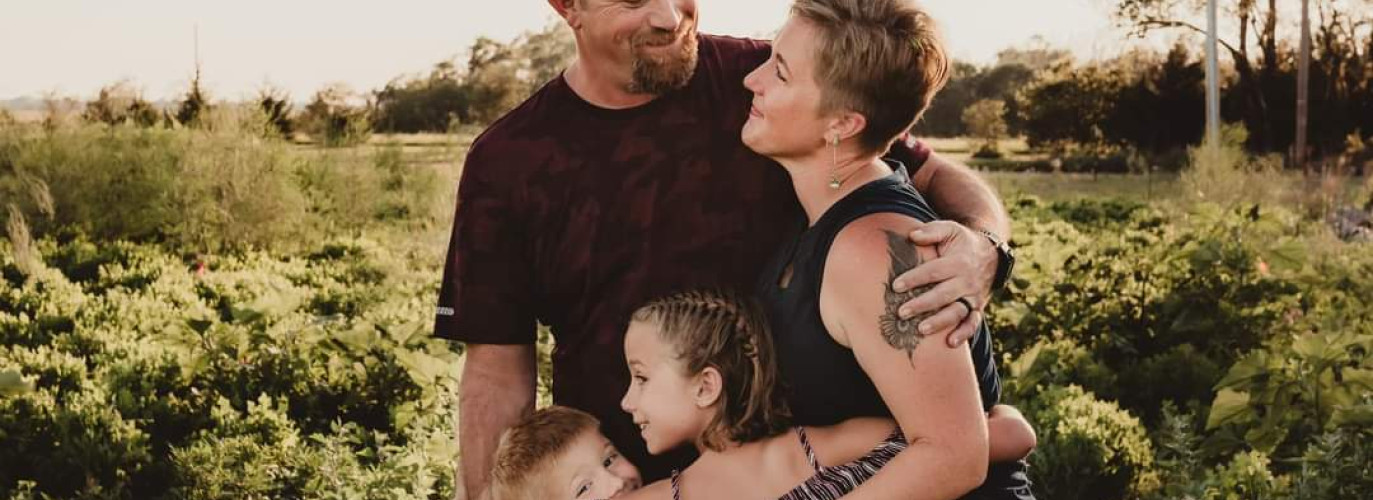
“The name for Anchor Farm comes from the idea that soil is what nourishes both people and our connections to each other,” Shelby says. “My husband was a city boy who grew up in northwest Wichita but spent every moment he could with this family boating at Cheney Reservoir. Thus the name Anchor Farm is idea of the soil being an anchor for our society.”
“We purchased and built two high tunnels,” Shelby says. “I began growing my own vegetables in the high tunnels. I also have a 1,000-crown asparagus patch.”
High tunnels, also known as hoop houses, extend the growing seasons in Kansas by at least one more, if not four full seasons of growing.
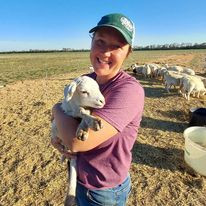
“I also started raising heritage pigs on pasture,” Shelby says. “We also bought a flock of hair sheep to be used as tools to regenerate the soil in our pastures. It turns out that those tools, the hair sheep, are quite tasty and nutritious as well.”
Over time, her flock of sheep has grown to 55 animals.
“I use an adaptive and intensive grazing method. I often partner with a neighbor who wants their property grazed, or maintained, but doesn’t want to raise animals. It’s a win-win since I don’t have to buy more land and they get the benefit of animals grazing their land.”
Diverse grazing means she uses different animals like cattle, sheep, pigs and goats to graze rather than just one species. For example, cattle prefer grass, goats eat brush and weeds, sheep eat forbs that create more uniform grazing and control unwanted plants. All of this leads to better pasture utilization and no need for herbicides. “I don’t see weeds. When I see a dandelion or mares tale I see a tasty and nourishing lamb chop”.
In addition to the multitude of growing projects on Anchor Farm, she also loves teaching others in the community how to grow. She supplies a local food bank and is active in advocacy efforts, especially around the concept of food is medicine.
The food is medicine movement is gaining traction in Kansas and other parts of the nation as groups have substantial research data on the positive impact of doctors prescribing healthy foods as mitigation and prevention of diseases caused by a poor diet. Shelby is supporting others to set up a group in Sedgwick County.
Check Shelby out on her Facebook page, Anchor Farm, or call/text at 316-300-3545 for purchasing her food as well as finding out where she sells it.
Note: Shelby is part of the Sedgwick County Harvest Hub’s Women Farmers and Ranchers of 2026.
File
FB_IMG_1687867059453.jpg