
Mar 12, 2026
By Sedgwick County Harvest Hub
In my past, while engaged in dairy farming, I was tasked with providing tours to the public as they visited the farm. It was always enjoyable, however inevitably the first words out of our guests’ mouths would be about the unmistakable aroma of cows. After being in the trenches of the farm for so long, you don’t realize the smell can be a bit awkward for newcomers. To help persuade our guests to perceive the smell in a different light, I would tell them, “That is the smell of money." They didn’t think about how the process of the cows eating food to make manure was also producing milk to be sold for human consumption. Additionally, they rarely understood manure was also used to layer our farmland with natural fertilizer to grow wheat, which provided more food to be sold for humans in the way of breads and cereals.
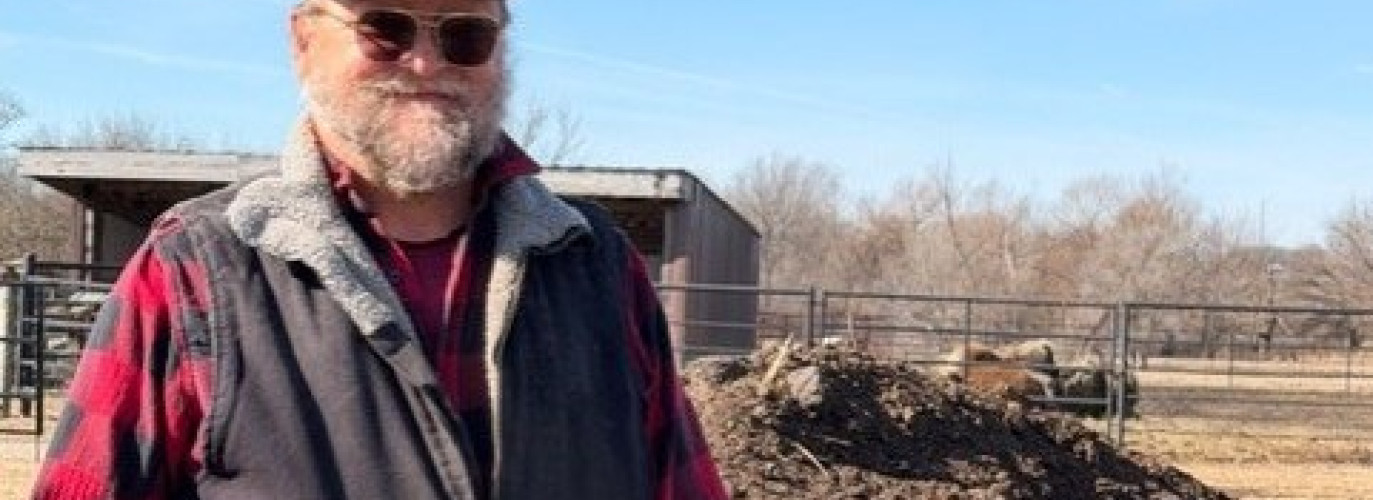
Recently, I had the opportunity to visit Jim Wilhoit, a retired farmer and entrepreneur of a business associated with the same material I had been promoting in my past life. Yes, that would be manure! Jim became the right-hand man of Cheryl Manahan, owner of the Wichita Riding Academy, a popular horse stable located in Derby. Cheryl had a problem: too much poo. Jim had the answer: beautiful compost. I would say this is a match made in heaven providing nutrients to the gardens of Sedgwick County and beyond. The product produced at the Wichita Riding Academy is made of manure, brome hay and wood chips; the business is referred to as Kansas Compost.
During this trip to the stable, my granddaughter and I were treated to a tour, including all the sights and smells of the farm. Jim showed us all the ponies, horses, donkeys, chickens, goats, a potbellied pig and a rogue turkey. All these farm animals contribute to the perfect product for local gardeners. Jim says quality is key when it comes to making compost and includes many steps in the process.
The manure is collected from various areas of the farm and laid in perfect windrows. After that, the manure is turned every three months. During this time, the product is monitored for temperature. The wind rows must maintain a temperature of 165 degrees for at least four days. This destroys any weed seeds in the compost; water may need to be added to aid in the heating process as well. The initial process of heating and turning the products happens during the first six to eight months with the right conditions. After that, the compost sits an additional 18 months to decompose more. No compost is sold from the stable unless it sits for a minimum of two years.
“We pride ourselves on having a quality product,” Jim says. “Many commercial companies shorten their time to only eight months. The longer it sits, the better it is.”
After the compost is ready, it gets packaged. Jim will sometimes enlist help as it is more laborious than just turning with the skid steer, watering and taking temperatures. They hand fill the compost using a bagging table and end up with bags weighing between 40-45 pounds each. The bags themselves are also a creative part of the Kansas Compost business. The bags are all recycled feed sacks from the stable portion of the operation. Jim has created an interesting way to invert and recycle the bags easily with a 5-gallon bucket rim. He then resows the bags shut.
“Why waste a good bag when we can reuse it for our composting business,” Jim says.
After retirement, Jim joined the stable crew in 2020 and started composting and selling more regularly in 2021. They currently sell around 1,500 bags a year. Cheryl and Jim are getting ready for the upcoming gardening season and have high hopes of exceeding previous year’s sales. Their customer base is mostly made up of “town folks,” according to Jim. They often have many questions and sometimes want to meet the horses that contribute to the product. Many are surprised the compost doesn’t smell.
“Compost won’t smell like the original product if it is processed correctly,” Jim says.
A high-quality product and a friendly face keep their customers coming back to this beautiful stable, bringing friends and family with them.
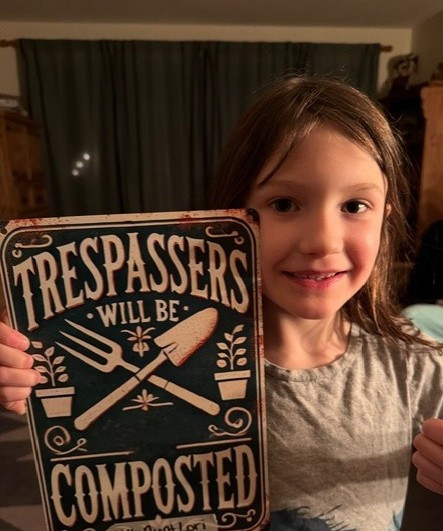
After our trip to the farm, my granddaughter, Burkley, and I had some interesting conversations about compost on the way home. At 7-years-old, she has a lot to say about all the farms we visit. I am glad I can share agriculture with her by taking field trips to the farms of Sedgwick County. She says they are the best and she learns so much. Later that week we stopped by a little antique store with family and came across a sign she said she must have for her room….
“Trespassers will be composted.”
For more information, visit Kansas Compost website.