
Oct 23, 2026
By Stephanie Eckroat
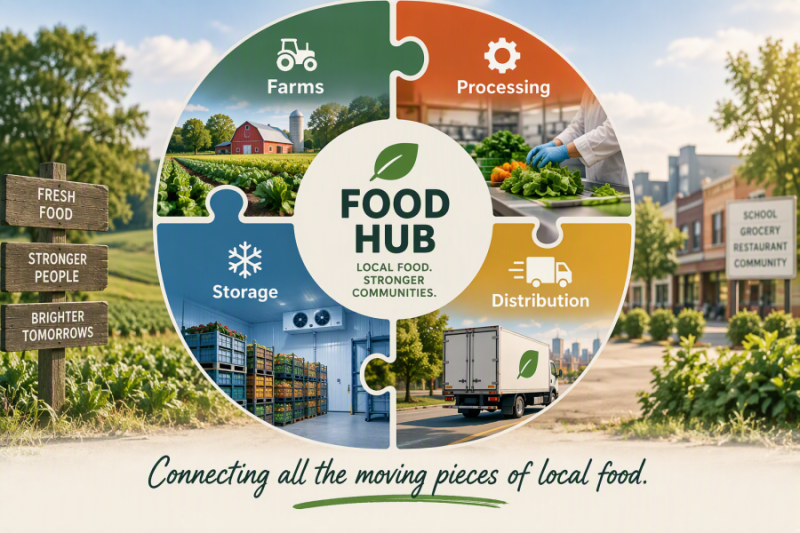
Locally grown food showcased at farmers markets often appear simple from the outside, fresh produce laid out on tables, coolers filled with meat and friendly vendors greeting customers, but behind that inviting scene lies a complicated and often exhausting system farmers and ranchers must navigate just to bring food to market. Across the United States, growers face a shared set of challenges that make running a local food business far more difficult than most people realize. Limited processing, storage and delivery capacity creates a bottleneck that affects everything from pricing to product availability to long‑term sustainability.
Processing is one of the first and most expensive hurdles. Whether dealing with animal protein or produce, small farmers often rely on a limited number of regional facilities that are already overwhelmed. Ranchers may need to book slaughter dates months or even a year in advance, long before they know what demand will look like. Produce processing, washing, sorting and packaging requires equipment and labor many small farms simply can’t afford. For farmers looking to turn their harvests into value-added products, such as jams, sauces, baked goods or prepared foods, incubator kitchens can provide an important and more affordable solution. These shared commercial kitchens give small producers access to professional-grade equipment, food preparation space and, in some cases, business development resources without the expense of building their own facilities. They can help farmers evaluate new products, extend the shelf life of seasonal produce, and create additional revenue streams. However, access to these kitchens may be limited by availability, rental costs, and food safety requirements. Regulations add another layer of cost and complexity, especially for meat. Some producers have solved these issues by investing in on‑farm processing, renting space or joining cooperatives, but the price tag can reach tens or hundreds of thousands of dollars. For many, that level of investment is out of reach, which is why the need for more local processing capacity or mobile slaughter units is a constant topic in agricultural communities.
Storage is another major challenge. Once food is harvested or processed, it must be kept safe, and cold storage is one of the most expensive parts of the local food supply chain. A walk‑in freezer or cooler can cost tens of thousands of dollars to build, and the electricity to run it adds ongoing expense. Produce complicates things further because different crops require different temperature and humidity levels. A cooler that preserves lettuce may damage tomatoes. Some regions have developed shared storage hubs, but access is limited and often costly. Many farmers wish they had shared cold storage hubs closer to home, but the infrastructure simply doesn’t exist in most rural areas.
Delivery is often the most overlooked cost. Getting products from the farm to the market requires time, fuel and often a refrigerated vehicle. Farmers may spend hours on the road each week, and every hour spent delivering is an hour not spent planting, harvesting or caring for animals. Fuel prices cut deeply into already thin margins, and coordinating deliveries with other farmers, while helpful, require trust, planning and investment that many communities struggle to organize.
Seasonality adds another layer of difficulty. Customers often expect consistency, but farming doesn’t work on a fixed schedule. Tomatoes do not grow in winter. Chickens take months to raise. Fruit trees produce once a year. Weather events can wipe out entire crops overnight. This mismatch between natural cycles and customer expectations makes it difficult for farmers to maintain year‑round customer relationships and creates financial uncertainty throughout the year.
Customer commitment is both a blessing and a burden. Many farmers rely on preorders, Community Supported Agriculture memberships or early commitments to plan their production. But customers often hesitate to commit months in advance, and farmers must buy seed, feed and supplies long before revenue arrives. If customers back out, the farmer absorbs the loss. Predicting demand is nearly impossible, especially for ranchers who must plan animal production months or years ahead. Securing pre‑season commitments can help, but it can also strain relationships if expectations are not aligned.
Some producers have found ways to overcome these challenges by investing in on‑farm processing, cooperative storage and delivery networks, greenhouses, subscription models or partnerships with restaurants and institutions. But these solutions require capital, labor, regulatory compliance, and risk tolerance many small producers simply do not have.
The challenges facing farmers aren’t about motivation or skill, they’re about infrastructure. Without investment in regional processing, shared storage, cooperative delivery, season‑extension technology and better market education, the local food system will continue to rely on the heroic efforts of individual farmers who are stretched thin. Running a local food business is far more complex than most people realize. Limited processing, storage and delivery capacity, combined with seasonality and uncertain customer commitment, creates a system where even the most dedicated growers struggle. The solution is not asking farmers to work harder. It is building better infrastructure, stronger networks and more realistic expectations between farmers and the communities they feed.